
The word itself carries weight.
Hell.
Say it out loud and watch what happens. People flinch. They picture flames. Pitchforks. Eternal screaming. Dante’s circles. Medieval paintings of demons with grotesque faces dragging souls into pits.
But here’s the thing.
That’s not what Jesus was talking about.
When Jesus used the word we translate as “hell,” he was pointing to an actual place. A real location his listeners could see from the walls of Jerusalem. A valley called Gehenna.
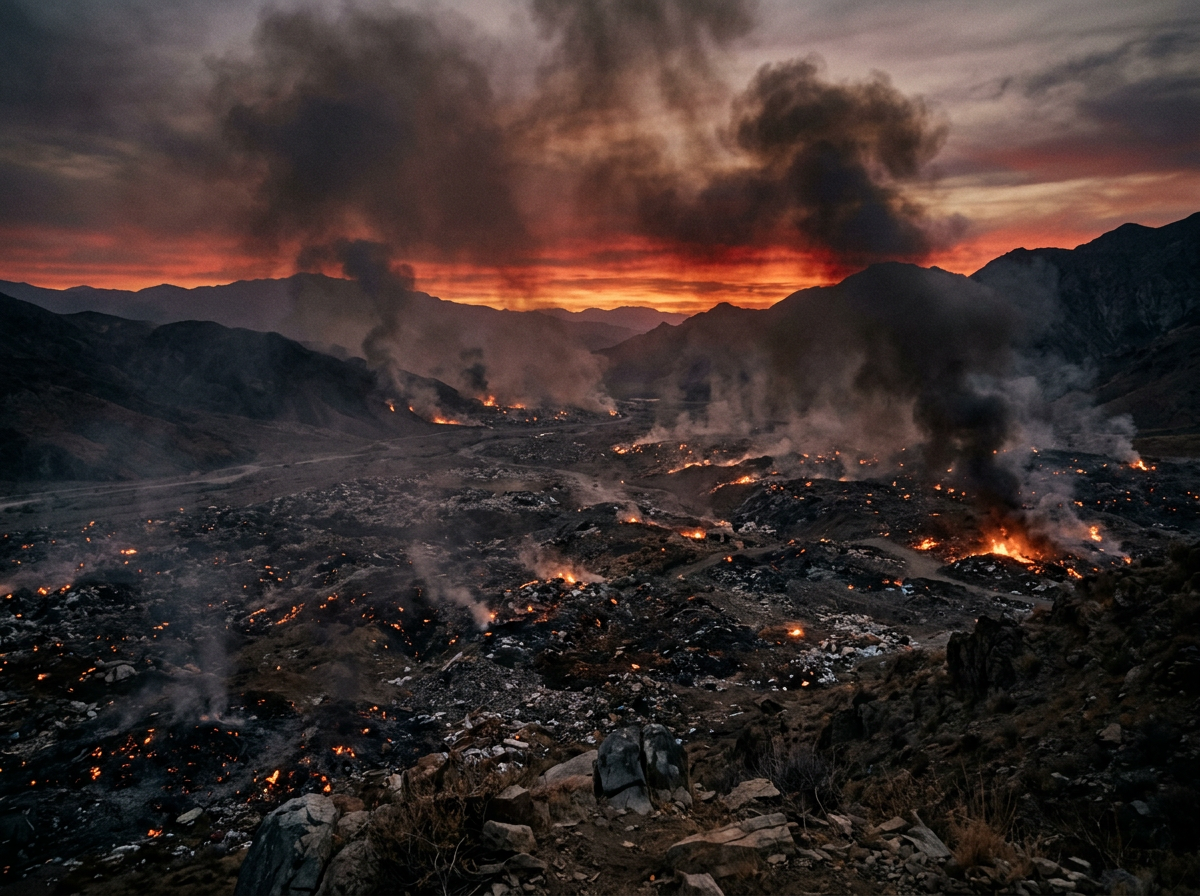
Gehenna was the city dump.
It burned constantly. People threw their garbage there. Dead animals. Refuse. The bodies of criminals who had no one to bury them. The fire never went out because there was always something burning. The smoke rose day and night. It was a place of shame, of waste, of things discarded and forgotten.
When Jesus warned about Gehenna, he wasn’t describing a cosmic torture chamber in another dimension. He was using an image everyone understood. A place of destruction. Of loss. Of being consumed by your own choices until there’s nothing left.
The earliest Christians didn’t all believe in eternal conscious torment.
That may come as a surprise, especially if you were raised in an evangelical background.
We’ve been told for so long that hell as fire-and-brimstone-forever is the historic Christian position. But it’s not. Not entirely. Not even close.
Some of the most respected voices in the early church believed something different. They believed in what we might call restoration. The idea that God’s love doesn’t give up. That the fire Jesus talked about wasn’t punitive… it was purifying.
Gregory of Nyssa taught that all souls would eventually be reconciled to God. Origen believed the same. These weren’t fringe figures. They were theologians who shaped Christian thought for centuries.
They read the same scriptures we do.
They just didn’t assume that God’s justice looked like endless punishment.
Think about what Jesus actually said about judgment. He talked about separation. About people choosing darkness because they loved it more than light. About those who built their lives on sand watching everything collapse. About being outside the feast while others celebrated inside.
He talked about consequences.
But he also talked about a love that pursues. A shepherd who leaves ninety-nine sheep to find the one that’s lost. A father who runs toward his wayward son while the son is still far off. A God who makes the sun rise on the evil and the good.
Jesus never said, “Believe the right things or burn forever.”
He said, “Follow me.”
He said, “Love one another.”
He said, “The kingdom of God is here.”
The fire he warned about wasn’t God’s revenge. It was the natural result of living against the grain of reality. Of choosing selfishness over love. Of building your identity on things that can’t last. Of refusing to see the image of God in other people.
That kind of life burns itself out.
Maybe hell isn’t a place God sends people. Maybe it’s what happens when we insist on going our own way. When we cling to our anger, our bitterness, our need to be right. When we choose isolation over connection. When we worship our own comfort instead of loving our neighbor.
And maybe… maybe the fire isn’t meant to destroy forever.
Maybe it’s meant to burn away everything that isn’t love.
The reformers didn’t all agree on hell either. We act like they did. We act like there’s one clear Protestant position handed down from Geneva. But read the debates. Read the questions they wrestled with. They knew the tension between God’s justice and God’s mercy. They knew the scriptures seemed to point in multiple directions.
Some leaned toward annihilation. The idea that souls who reject God simply cease to exist rather than suffer eternally. Others believed in a kind of purgation. A painful but temporary separation that eventually leads to restoration.
What they didn’t do was treat hell as the main point.
The main point was always Jesus. The cross. The resurrection. The kingdom breaking into the world. The call to follow. The promise that love wins.
Hell became the main point later. When Christianity got tangled up with empire and power. When the church needed a stick to threaten people with. When fear became a more effective tool than love.
But that’s not the gospel.
The gospel is good news. Not “believe this or else.” Not “get it right or suffer forever.” The good news is that God became human. That Jesus walked among us. That he showed us what love looks like. That he died and rose again. That nothing… nothing… can separate us from that love.
Even our own stubbornness.
Even our own darkness.
Even our own hell.
So what is hell?
Maybe it’s the experience of being confronted by perfect love when you’ve spent your whole life running from it. Maybe it’s the pain of having your false self burned away. Maybe it’s the shame of seeing clearly, for the first time, how much harm you caused. How many chances you missed. How far you wandered.
That would be hell enough.
But if God is love… if God really is love… then even that hell has a purpose.
Not punishment for punishment’s sake. Not divine revenge. Not cosmic payback.
Healing.
Restoration.
The slow, painful work of becoming who you were always meant to be.
The early church fathers who believed in universal restoration didn’t think everyone just gets a free pass. They believed in judgment. They believed in consequences. They believed some people would experience profound suffering as they faced the truth about themselves.
But they also believed that God’s love is more stubborn than our sin.
That grace is more powerful than our rebellion.
That the arc of the universe really does bend toward reconciliation.
You don’t have to believe that. You can hold to a more traditional view of hell if it makes sense to you. But you should know it’s not the only view. It’s not even the oldest view.
And you should ask yourself what kind of God you believe in.
A God whose justice requires eternal torture? Or a God whose justice looks like a father running toward his lost child?
A God who gives up on people? Or a God who pursues them into the darkest valley?
A God who says “too late” after seventy or eighty years? Or a God who says “I will never leave you or forsake you”?
Jesus talked about Gehenna because his listeners needed to understand the stakes. The path you choose matters. The life you build matters. The way you treat people matters.
There are consequences.
But the point was never to scare people into compliance. The point was to wake them up. To help them see that the kingdom of God is here, now, available. That you can step into it today. That you don’t have to wait until you die to experience resurrection.
Or hell.
Both are present realities. Both are choices we make every day.
When you choose love, you’re choosing the kingdom. When you choose fear, control, selfishness, isolation… you’re choosing Gehenna. You’re choosing the fire that consumes. The garbage heap. The place of waste and loss.
But even there…
Even in the valley of burning refuse…
The smoke rises up.
And God sees it.
Discover more from Jesus Quest
Subscribe to get the latest posts sent to your email.