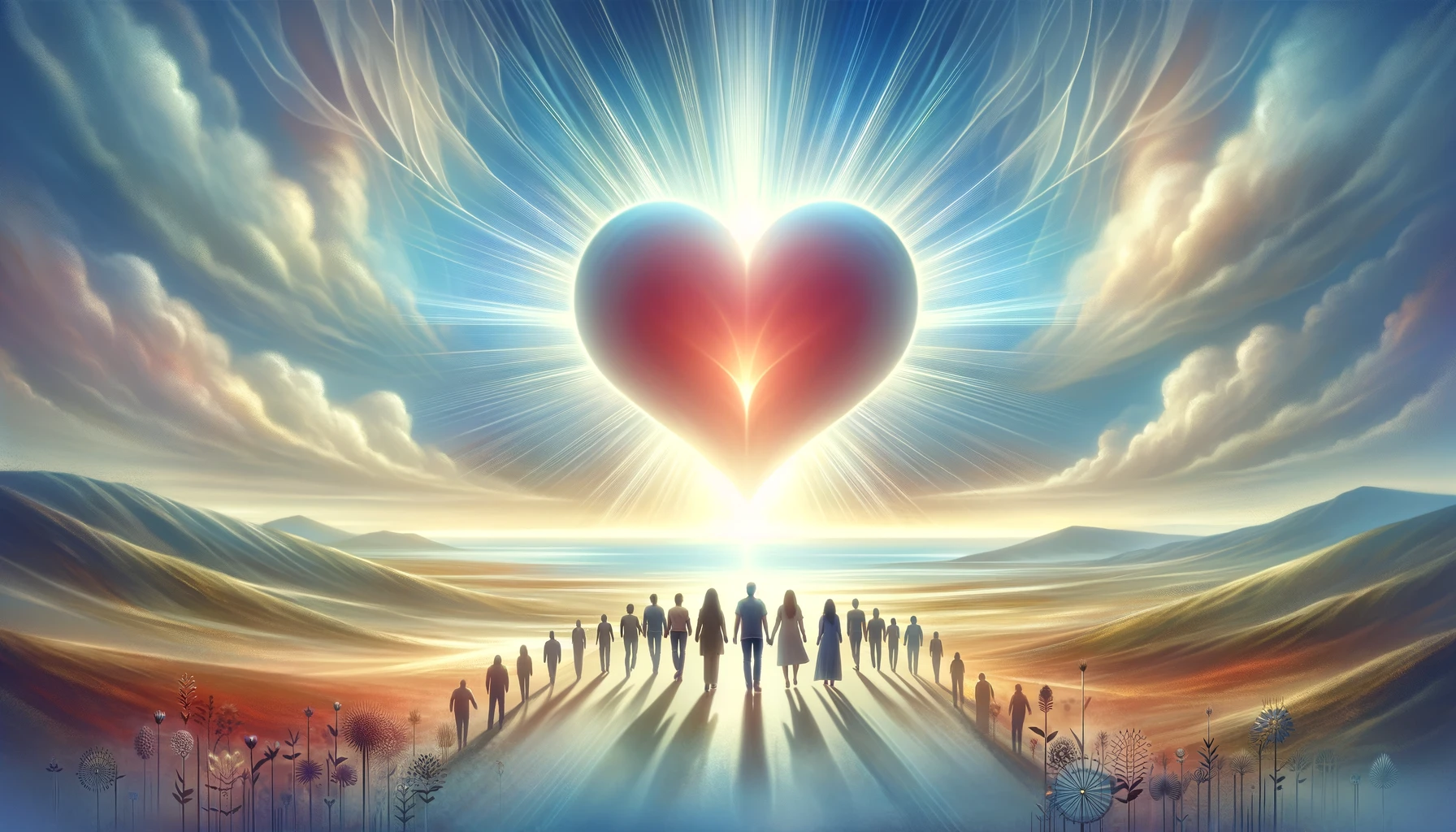
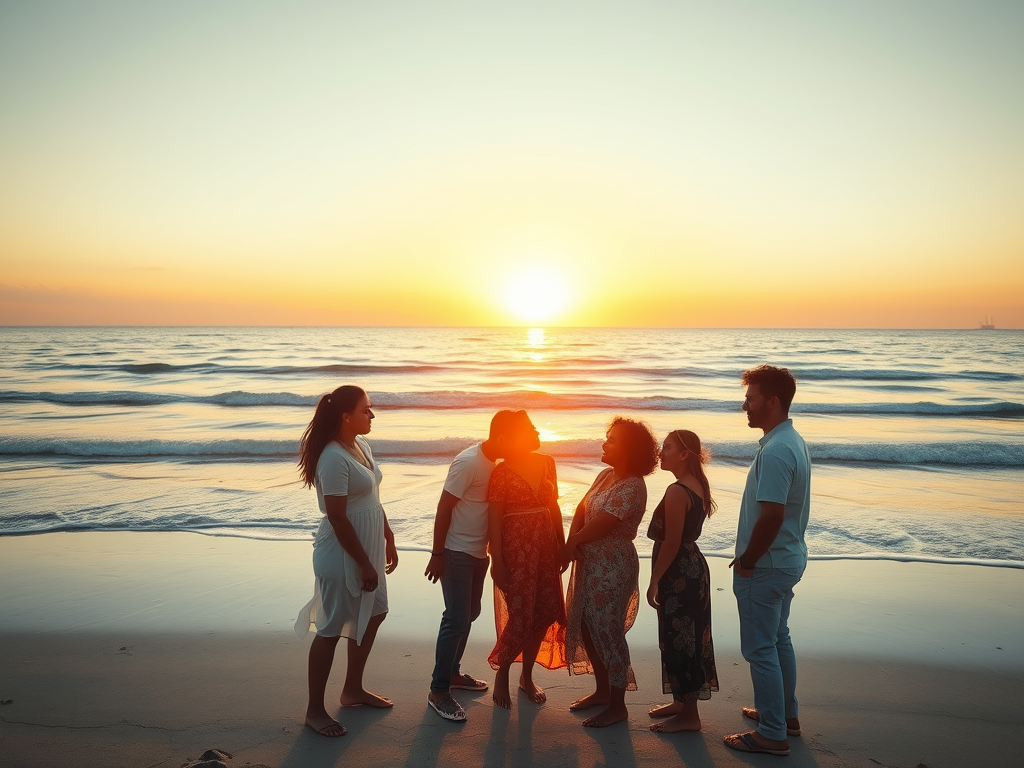
There’s something remarkable about standing on a beach at sunrise. The horizon stretches endlessly, indifferent to who’s watching. The waves don’t ask your nationality before they touch your feet. The sun doesn’t check your credentials before warming your face. Creation itself seems to whisper a truth we’ve spent centuries trying to ignore: we’re all standing on the same shore.
Jesus understood this better than anyone. He looked at a Samaritan woman and saw a person worth talking to. He touched lepers when everyone else kept their distance. He ate with tax collectors while the religious elite clutched their pearls. Again and again, He crossed lines that others had drawn in the sand—lines that were never meant to be there in the first place.
We’re good at drawing lines, aren’t we? We’ve gotten creative about it. We draw them based on skin tone, accent, zip code, political affiliation, who someone loves, how much money they make. We’ve turned the human family into a complicated seating chart at a wedding where nobody wants to sit together.
But here’s what we forget: the Divine didn’t create us from a cookie cutter. Each person carries something unique, some particular way of reflecting the image of God that no one else can duplicate. Your neighbor’s gifts aren’t your gifts. The person who votes differently than you sees angles you might miss. The immigrant family down the street carries stories and strengths that could enrich your community if you’d let them.
This isn’t about pretending differences don’t exist. They do. They’re beautiful. They’re intentional. The problem isn’t diversity—it’s our fear of it.
We all watch the same sun set. We all know what it feels like when rain soaks through our clothes. We all face uncertain tomorrows, wondering if we’ll have the strength for what’s coming. Pain doesn’t discriminate. Neither does joy, if we’re honest. The things that make us human—the laughter, the grief, the hoping, the trying—these transcend every boundary we’ve invented.
So what’s missing? What’s the ingredient that could actually bring us together instead of just talking about it?
It’s simpler than we want to admit. It’s love.
Not the greeting card version. Not the feeling that comes and goes like weather. The kind of love Jesus modeled—the kind that sees someone different and moves toward them instead of away. The kind that asks questions instead of making assumptions. The kind that shares a meal, shares a burden, shares life.
This love doesn’t erase differences. It celebrates them while refusing to let them become walls. It says, “You’re not like me, and that’s exactly why I need you in my life.” It recognizes that the person who makes you uncomfortable might be the very one God placed in your path to teach you something essential.
When we love like this, something shifts. The boundaries we’ve maintained so carefully start to blur. The categories we’ve used to sort people begin to feel silly. We start seeing individuals instead of stereotypes. We start hearing stories instead of statistics.
And here’s the thing about this kind of love—it’s contagious. When one person decides to cross a line, others notice. When one community chooses welcome over suspicion, it creates ripples. Small acts of connection become movements. Conversations become friendships. Friendships become family.
The early church understood this. They were a ragtag bunch—Jews and Gentiles, slaves and free, men and women—all sitting at the same table, sharing the same bread. It was scandalous. It was revolutionary. It was exactly what Jesus intended.
We need that revolution again.
We need people who will look at the divisions in our world and refuse to accept them as permanent. We need folks who will reach across aisles, across streets, across every artificial boundary we’ve constructed. We need communities that reflect the wild, wonderful diversity of creation itself.
This isn’t naive optimism. It’s harder than cynicism, actually. It requires courage to share someone else’s pain. It takes strength to celebrate someone else’s joy when their life looks nothing like yours. It demands humility to admit that your perspective isn’t the only valid one.
But it’s possible. More than possible—it’s what we were made for.
Every person you meet is the only version of themselves that will ever exist. They carry something irreplaceable. They reflect some aspect of the Divine that you can’t see in a mirror. To dismiss them, to other them, to keep them at arm’s length—it’s not just unkind. It’s a loss. Your loss.
So maybe today, we start small. We learn a name. We ask a question. We listen to an answer that surprises us. We sit with discomfort instead of running from it. We choose curiosity over judgment.
We let love do what it does best: bring worlds together.
Because at the end of the day, we’re all standing on the same shore, watching the same horizon, hoping for the same thing—to be seen, to be known, to belong.
Love makes that possible.
Love makes that real.
Discover more from Jesus Quest
Subscribe to get the latest posts sent to your email.